Tuesday, December 28, 2010

Stardust


Back again! I am on a roll with the blogging. I am making up for my blog slacking-ness I'm telling you. Anyways, I am reviewing a book that I finished reading a little while ago because I had actually already seen the movie and was curious how the two compared. I tend to do this a lot. If I have seen the movie, I'll want to read the book and vice versa. Usually it's the other way around but anyways, without further ado Stardust by Neil Gaiman.

Characters: Tristran Thorn: hopelessly in love with Victoria Forester/goes hunting for a falling star/is not entirely human
Yvaine: actually a fallen star/is very annoyed that Tristran has captured her/wants desperately to return back to the sky
The Witch-Queen: one of three extremely powerful witches/hunts Yvaine in order to harness her power/wishes to become young again
Lord Septimus: wishes to become the next ruler of Stormhold/has killed off most of his brothers/is the one who gets closest to becoming the next king

The Plot: Tristran Thorn is becoming desperate. He has tried everything to win the attentions of Victoria Forester (not a major character but has an important role in the beginning) but to no avail. Then one night as he walks Victoria home, Tristran watches a star fall from the sky. Victoria tells Tristran that if he brings her the star that she will marry him. Tristran travels across the Wall (Tristran lives in a town where there is a "Wall" and once you cross this "Wall" you enter a wrold of magic and faeries) in his village and into the strange land beyond where unbeknownst to him, he was born years earlier. When he manages to locate the star, to his surprise the fallen star isn't a rock: its a human. A human with quite a temper. Annoyed that she has been captured by the likes of Tristran Thorn, Yvaine attempts to escape Tristran's clutches. However, danger lurks at every turn as one of the oldest witch-queens in the land across the Wall pursues them relentlessly, in the hopes of capturing Yvaine and using her to create eternal youth. Also, Lord Septimus wants to find the amulet of Stormhold, which will make him King, even if that involves killing anyone who gets in his way.

What I liked: It is such a cute premise for a story. I thought it was really original how Tristran goes looking for a fallen star to give to his "sweetheart" Victoria. I use the word "sweetheart" in quotes here because Victoria merely tolerates Tristran's presence. But I thought the overall setup of the novel was cute and all of the characters had distinctive personalities that made the book a quick, entertaining read.

What I didn't like: I think I made the mistake of viewing the book and the movie out of order. Honestly, I liked the movie so much better that I had a hard time enjoying Stardust. Now, I am not one of those people that instantly likes the books better or instantly likes the movies better. Harry Potter? Awesome movies and books but books are still better sorry Warner Brothers. The Lightning Thief and Inkheart? No comparison. Sherlock Holmes? Stories are literary genius and while I love the movie, falls short of the book. Twilight? Both awful, and I enjoy torturing myself with watching the movies when they come out. The point is that I am not one of those people who gets freaked out about preserving the artistic integrity of a book. I think that you need to change a story to make it your own because you can never live up to the original words that people fell in love with. That being said, you cannot drift too far or you will alienate your viewing group. But I felt like the Stardust movie took a book that had potential, and turned it into something that was far better than what was originally written. Stardust (movie version) had so much more humor from the secretly gay ship captain, to the hilarious ghosts commentating on their brothers' deaths, there were so many other cute moments that I feel like Gaiman could have reached. All the elements were in place, the ghosts were present and the ship captain, I just felt...sad I guess that those little details weren't there because that is why I fell in love with the story. But I can forgive Neil Gaiman for that. I cannot forgive him for the ending. The witch-queen just decided that she was going to give up hunting Yvaine. Really? That is not only 1. completely out of character and 2. builds you up to this climax that doesn't really exist. You feel almost like you missed some crucial chapter, and just skipped to the feel-good wrap up at the end. Also, Tristran doesn't really choose Yvaine at the end. Victoria tells Tristran she loves someone else and that she'll marry him but she really doesn't want to, and Tristran wises up and decides not to marry her. He doesn't realize she manipulated him and used him and had no intention of being with him until she tells him. "Oh uh well I guess I'll just marry Yvaine then uh cause I'm afraid of being alone." says Tristran. (Not really but that's what I imagine him saying). Seriously, such an awful ending that I wanted to tell Neil Gaiman to just watch the movie and get ideas for how to fix it.

Overall: 4 out of 10. Missed a lot of attempts for humor and a terrible ending bring this score down but the cute premise and somewhat lovable characters save this book.

Monday, December 27, 2010

Cleopatra's Daughter


Hey everyone! Didn't think I'd be back did you? Ah ye of little faith. I have arrived and I am reviewing a book that I just finished reading yesterday. I figured since it's fresh in my mind why not go ahead and do it? Well here we go: this is my review on Cleopatra's Daughter by Michelle Moran, (kudos to my mom by the way she's the one that spotted this one)

Characters: Kleopatra Selene: daughter of Cleopatra and Marc Antony/the last of the Ptolemies/moves to Rome to stay with the Roman emperor Octavian's family
Alexander Helios: son of Cleopatra and Marc Anthony/twin of Selene/spends most of his time trying to prevent Selene from doing something drastic
Julia: daughter of Octavian/engaged three times since she was two/has been forbidden to ever see her mother again
Marcellus: a potential heir to Rome/currently betrothed to Julia/has a bit of a gambling problem
Juba and Agrippa: two of Octavian's most trusted allies/live in the family compound with Octavian and his sister Octavia/both very sympathetic towards the slaves
Octavia: sister of Octavian/hates her brother's wife Livia/loves to do charity work

The Plot: Kleopatra Selene, Alexander Helios and Ptolemy are the future kings and queens of Egypt. All of that changes when their father, Marc Antony loses his final battle and commits suicide as Octavian, Antony's rival for power in Rome, sweeps into Egypt and takes the throne from Marc Antony and his wife, the famous Cleopatra. As they are taken captive, Cleopatra commits suicide and Selene, Alexander and Ptolemy are to accompany Octavian back to Rome. But along the way, Ptolemy dies and Selene cannot help but wonder how much longer she and her twin Alexander, the last of the Ptolemies, will survive. They arrive on the shores of Rome and find a land that is so unlike their own Selene instantly contemplates running away. But her fear of this new land and her hope that she may one day return to Egypt prevents her reckless escape with her brother. Terrified that Octavian may decide that they are no longer useful at any point, Selene is desperate to prove her worth while not losing the part of her that will not comply with Octavian's will. As slave rebellions rock Rome, Selene is forced to question everything she knows and how far she is willing to go to return home.

What I liked: Okay so I really really REALLY like historical fiction. Sorry, I know it's kind of nerdy and all, but as I have said before I wouldn't be doing this blog if I wasn't a nerd. Just for the sake of clarity, I guess I should tell you why I like historical fiction. I like historical fiction because it captures the essence of a time and takes you to a place that has actually existed. It gives you a taste of what really happened during a particular time, and it gives you a sense of what life was like. It also breathes life into these people that you read about in your history textbooks and they each get a life of their own. I am a major history geek and I want to focus on ancient history, so this was a really awesome book for me to read. Also, I have been OBSESSED with Ancient Egypt for as long as I can remember. I love reading about Ancient Egypt and the mummies and the pyramids and how the pharaohs built these incredible monuments, some of which still hasn't been discovered. Ancient Rome is also a favorite period of mine too. But back to Cleopatra's Daughter now that I have brought my tangent back home - I thought all of the characters were extremely well developed which I found very surprising. I would have thought that because it was a historical novel, that Moran would be limited by the characters and the fact that we don't really know all that much about these people. I was caught off guard though, and pleasantly though. Selene, who had this personality which was very aware of the social injustices of her time, was so close to her brother and had such care for him. I found this very endearing because most of the sibling relationships in the novel were dysfunctional at best. And the fact that she loves architecture made her more real. Also, Alexander, the boy who loves to gamble, ride horses, and yet has a secret that he has hidden for almost anyone. No, I'm not going to tell you what it is (but by the way, I totally called it). I thought all of the events that Moran included shaped the novel beautifully. By having the children required to attend the trials of "criminals" (I put it in quotes for reasons that become clear if you read the book) you got a very accurate, penetrating description into Roman life. I thought that was truly special.

What I didn't like: *MAJOR MAJOR MAJOR SPOILERS.THIS WILL RUIN THE REST OF THE BOOK. IF YOU DON"T WANT IT TO BE RUINED, PROCEED TO SPOILER FREE ZONE* I thought Juba's romance with Selene was rather sudden. Don't get me wrong, I liked Juba the best because I thought Marcellus was an idiot. But all of a sudden, Selene who has been moping the whole novel over Marcellus (yes she was moping-it was pathetic because not only was he engaged but it was to her best friend) and then she suddenly realizes how awesome Juba is. All very very sudden. *SPOILER FREE ZONE* Also, there is a scene that Moran had to include but it made me actually kind of sick. One of Julia's old friends is pregnant and giving birth to a child with an old man that she is married to. He is about sixty and she's about thirteen. When he sees its a girl, he tells the maid to take the child "to the dump". It was in the middle of winter. It was awful. But then Octavian, the ruler who killed Selene's parents, has killed slaves without even caring, says that he wants to leave the old man's house. The old man says something to the effect of that it's too cold and that he should stay. Then Octavian says "I'm sure your daughter would have liked to stay the night as well. When you shiver, remember how cold it is in the dump." OH SNAP. But I had a really hard time stomaching the fact that girls younger than me were married to guys older than my dad and were already pregnant. They had no control over their lives and could be married as many times as their male relatives decided. Sometimes, I am really glad I didn't live in Ancient Rome.

Overall: 8 out of 10. While I really liked it, I found that Selene's random romance with Juba was too quick and kind of took away from the ending of the book.

Sunday, December 26, 2010

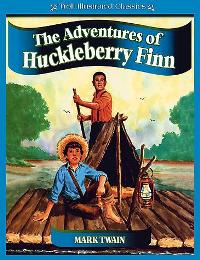
The Adventures of Huckleberry Finn


Hey everyone! Well, it is the first time that I have written a blog in months but I have been so busy with school that I just couldn't find the time. But my goal *fingers crossed* is to try and blog actively over the winter break. To start it off, I am going to review a book that I just finished reading for AP English - The Adventures of Huckleberry Finn by Mark Twain.

Characters: Huckleberry Finn: part of Tom Sawyer's "kidnappers" and "murderers" group/ escapee from his father's clutches/friend to Jim
Jim: Huck's guardian's slave/escapes slavery after he hears he will be sold/is very superstitious.
The Duke and the King: two con-artists that Huck and Jim rescue/are truly evil/come up with various schemes to get money and harm people
Tom Sawyer: Huck's friend/is the most "well-read" of anyone Huck knows/thinks that everything can be turned into some sort of epic adventure.

The Plot: Huckleberry Finn has barely recovered from his adventures with Tom Sawyer when more danger arrives in the form of his father. His father, hearing of the money Huck got after he found Injun Joe's treasure, comes to find Huck in order to take his money. Huck is currently living with the Widow and he hates it. But when his father takes him from the Widow, Huck finds his life going from bad to worse. Huck fakes his death in order to escape his father and "sivilization" and decides to live on an island for the rest of his life. Imagine his surprise when one of the Widow's slaves, Jim, appears on the same island. Having heard that the Widow was going to sell him "down the river" Jim escapes and hopes to run away to freedom. When Huck and Jim are close to being discovered on their island, they build a raft and head down river towards the dangerous Deep South. The farther they go, Huck's rebellious spirit makes him question slavery and whether or not turning Jim in is something that he should do.

What I liked: I honestly loved this story. I think part of the reason that I loved this book so much is because I loved Huck Finn. Huck Finn was the type of narrator that any good book should have. Brutally honest, clever but with an affinity for breaking the law, and a good heart, you instantly love him. Huck has this habit of telling people what they want to hear in order to better his situation by playing off what they tell him, and twisting it so they instantly believe them. For example, at one point Huck has locked a bunch of murderers and robbers in a steamboat but feels bad because he thinks they will drown as the boat sinks. He then proceeds to tell the boatman about the boat, but the boatman says his boss won't let him leave his post. So Huck simply tells him that its his boss's family on the boat. Simple cleverness like that makes him a lovable character. The fact is though, Mark Twain chose a good narrator when he picked a young boy. If you have read "To Kill a Mockingbird", its kind of the same situation with the narrator as Scout (a young girl). By having a young child as the narrator, they are able to question society differently because they are so young and haven't accepted the social prejudices of their society. My favorite part of the book is when Huck decides early on that he doesn't want to go to heaven because the Widow's sister Miss Watson says that she is going there. Just this point blank honesty makes Huck a powerful narrator. At one point, Huck can see these men coming down the river and he swims to them to ask for directions. Huck has to decide if he will turn Jim in, even though he has been taught that God approves of slavery. He is sitting there and decides that "well, I'm going to hell then," and decides to not turn in Jim. This young boy has already accepted his fate and is not ready to change what he believes in order to compromise himself. What I thought was really interesting is that a lot of people think that Mark Twain was a racist and that this is a racist book. Personally, I just really couldn't understand that. It seemed so obvious to me that this book was about a struggle between what Huck knew was right and what society was telling him that I just couldn't understand why people think the book was racist. If I had to guess it was probably because the book had the n-word in it. I don't know that just seems ridiculous. Twain wrote a book that was true to the times and preserved the historical accuracies of the time. For me, this made the book more real: I love books that take a historical time period and put fictional characters in it in order to criticize or comment about that society. It makes the book come alive. If you didn't have the n-word, it would be like hiding a part of that society. Twain wasn't a racist, just a man commenting on society. If you want to see more of Mark Twain's satire in "Huckleberry Finn" check out this link: http://www.goatview.com/may21juliamoore.htm.

What I didn't like: Tom Sawyer is a jerk! Sorry but there really isn't a nice word for how he acts. *MAJOR MAJOR MAJOR SPOILERS AHEAD PROCEED AT YOUR OWN RISK* Jim ends up being captured and being held as a fugitive slave in Tom's Aunt's house. Tom and Huck decide to free him, but Tom thinks that Huck's plan is too sensible. He comes up with this elaborate scheme that delays Jim's rescue for several months and almost gets all three of them killed, and Jim doesn't even get rescued. Tom even withholds the information that Jim was free all along just so he can play his little game with Jim. While I understand that Twain did this in order to show how Tom hasn't changed while Huck has, I still hated this part.

Overall: 10 out of 10. An American classic that doesn't deserve the bad rap it gets.

Sunday, November 21, 2010

Catch 22


Hey everyone! Its been awhile but now I am back and ready to blog since I have a free weekend. I will try to do another blog later in the week because it is almost time for THANKSGIVING BREAK! But without further ado, I am going to review a book that I had to read for AP English, Catch 22 by Joseph Heller. Here we go!

Characters: Yossarian: bombardier for the American army/thinks everyone is trying to kill him/has a dead man in his tent
Chaplain: the minister of the army/a friend of Yossarians/has a hard time dealing with the functioning of the military units
Milo: runs the syndicate/a "friend" of Yossarians/is the mayor of almost every town in Italy
Colonel Cathcart: is obsessed with becoming a general/like most of the people in power he is not too terribly bright/constantly raises the mission levels of his men
Doc Daneeka: military doctor who always thinks something is wrong with him/thinks Yossarian is crazy/has a fear of flying

Plot: There was only one catch, and that was Catch 22. Catch 22 states that in order to willing fly bombarding missions you have to be insane and the only way to get out of flying missions is to prove that you are insane. However, as soon as you apply to get out of flying, that proves that you are sane for not wanting to willing endanger your life, proving you are ineligible to be relieved. This is Yossarians world. A soldier stationed in Pianosa Italy during World War II, Yossarian is plagued with the notion that everyone is trying to kill him and that there is no way he can get out of this war alive. Coupled with the fact that Colonel Cathcart raises the number of missions flown in order to be sent home daily, Yossarian finds himself in his own personal hell. Along with his friends Nately, Milo, Doc Daneeka, and the Chaplain, Yossarian tries to navigate this confusing world while still wondering if it is even possible for any of them to escape with their lives.

What I thought: I know that I usually do a "what I liked" and a "what I didn't like" section but this book is so complex I had a hard time trying to separate my thoughts into two nice neat categories, so I am going to put them all together in one big section, not unlike Catch 22. But anyway back to the book. Let me just start off by saying that I pride myself on being a good reader and being able to follow a book no matter how strange the dialect, or confusing the plot, or crazy the circumstances. This is the first book that I have ever read that has made me confused. I don't say this lightly. Part of the reason this review was so difficult to write is because I am still not entirely sure what went on. However, I don't think that I was prepared for reading Catch 22. I don't mean that I couldn't handle the actual words: there were just so many allusions and references I had no idea what was going on. It frustrated me that none of the characters seemed very well developed. All Nately was was a love sick boy who couldn't wait to get back to his "whore" (Heller's words not mine) in Italy. Yossarian and the rest of his squadron minus the Chaplain were just a bunch of teenage boys who couldn't stop looking at women as some sexual objects for more than two seconds. Frankly, it made me a little nauseous how raunchy this book was. I still don't understand the purpose of the characters being like this unless it was to objectify them and make some statement about the military in general, but I don't think that was the case. However, the actual premise of the book was pure genius. The idea of "Catch 22" was amazing and the situations such as with Doc Daneeka's "death" and the Great Loyalty Oath Crusade really made serious statements about bureaucratic interference in war. Also, the last third of the book was absolutely inspired. Before the last third, Catch 22 seemed to just fly around jumping from character to character and not lasting long enough on each to make the reader love, hate or even get a feeling about any character. The last part though, took a darker turn and focused on Yossarian's loss of most of his friends. One of the last chapters is called "The Eternal City" and it was one of the most haunting pieces of any book that I have ever read. It even had some knock out funny points that made Catch 22 enjoyable to read (something I learned after reading, look up the meaning of "Scheisskopf" in German. Just one of the many things I missed that was pointed out to me by my English teacher). I believe that if I read it again, I would appreciate Catch 22 more. I honestly wish that the book had more of a chronological timeline: it jumped around so much that I had no idea what was going on half the time. Again though, I think this book may have been a little over my head: if I were to read it again though, I might be able to understand it a little bit more.

Overall: 8 out of 10. Catch 22 has made me acutely aware that there is much I have to learn about reading and that books can be confusing and crazy yet still be pure literary genius.

Sunday, October 31, 2010

Rachel Carson's Silent Spring (The Manifesto Series)


Alright! So my next book is a mini novel I had to read for my APES (Advanced Placement Environmental Science super exciting right?) awareness hours. My awareness hours involve learning more about the environment through classes, lectures and other environmental experiences. I understand why we have to do it, but it does seem to take up a lot of my time however, I did get to read an interesting book which is part of Manifesto's Words that Changed the World series. So here is my review of Manifesto's Words that Changed the World, Rachel Carson's Silent Spring.

Characters: Again, like the previous book I reviewed, this book isn't much of a narrative so it has no real "characters".

The Plot: Not many people had ever heard of Rachel Carson's Silent Spring. At least not in today's world. But forty years ago in the 1960's and 1970's Rachel Carson was changing the way the world looked at the environment. Starting from Rachel Carson as a child and following her life as she was thrust onto a national stage, this book follows Rachel Carson on her amazing journey to save the world. It offers a personal and chilling glance into Carson's life as she furiously combats the DDT companies while battling her own demons, namely a cancer that would plague her for the last years of her life. This book not only exposes the tactics the companies used to try to keep the American public in the dark, it brings to light the journey all of us must take in some form or another to push away the ignorance and see what is really before our eyes.

What I liked: I have to admit, this Manifesto series is pretty awesome. My word choice is astounding right? Such a high intellectual capacity being displayed by yours truly. I'll be the first to admit while it is not the most beautiful of phrases, it works well enough. What other series takes books that have changed the very fabric of society and gives them to us in a form that can give the average reader a taste of what these books did to change society. While it is probably because I love books so much that this book appealed to me in the first place, any book that looks at literature critically and examines its effect on society is automatically a winner in my eyes. And Rachel Carson's Silent Spring Manifesto special was no exception. It was very well written, as opposed to An Inconvenient Truth, and also offered up hard details. This book was not catered to the masses, rather it catered to a select group. This is a group that would actually pick up this book in the first place - a more intellectual group that was looking for that kind of knowledge in the already. This is different from An Inconvenient Truth because it catered to the masses and as a result fell short because the masses didn't want to read the book and could not relate to it. Manifesto's book did not leave us disappointed. What I loved was the fact that Rachel Carson was the hero. Obviously she was because she actually wrote the book, but for me anytime I see a woman changing the world completely, it is something to be happy about. Rachel Carson completely changed the world of environmental science while battling against death threats and breast cancer, and that makes me feel like anything in the world is possible and that is truly magical. Also, I really liked the format of the book. The authors started out with a basic introduction into Carson's life which really gave you a basic understanding of who she was and how she became the person she was. For me, this is essential in any good book. You can ask my family anytime I read or watch TV, I always want to know the background. It gives life to the book and creates a realism that nothing else can. It drops you right into the characters world and makes you believe as if they are a close family friend and you are watching the characters like you have always known them. Then the book jumps into Carson's journey to writing the book and then the effect Carson had on the world. This kind of format paints you a complete picture that doesn't leave out any information and yet leaves you wanting to know more at the same time.

What I didn't like: Rachel Carson died at the end. A part of me was crushed inside. But like almost all great leaders, few see the fruits of their labor accomplish the goals they were set out to achieve. Perhaps that is the curse of greatness.

Overall: 10 out of 10. This book showed us a world that is not unlike our own, and the parallels that were drawn between our situation and the problems of Rachel Carson's world cannot be missed even on the most absentminded of readers. I am extremely interested in reading more of the Manifesto series and congratulate the authors on a job well done on a fantastic book.

Saturday, October 30, 2010

An Inconvenient Truth


Hey everyone! Long time no see! Well I was reminded this morning that it has been almost a month since I last wrote on my blog. School has been keeping me busy, but I'll make it up to you: today I am going to do two blogs on two books: An Inconvenient Truth, and Rachel Carson's Silent Spring (Part of the Manifesto Series). Well here we go and I hope you enjoy...An Inconvenient Truth by Al Gore.

Characters: Because An Inconvenient Truth is a nonfiction book based off Al Gore's documentary/traveling environmental awareness adventure, their are no main characters.

The Plot: Al Gore's An Inconvenient Truth is nothing short of a plea to save the environment. Through graphs, polls, interviews and general research, Gore paints a picture of a future in which Earth has been completely depleted and we have let our children down in saving our world. Using his experience as a politician, Gore attempts to convince us that while this problem of global warming may be an inconvenient one, our home is a place worth saving and we cannot allow our children to inherit the problem that we created.

What I liked: I liked that An Inconvenient Truth was an accessible book to the everyday American. Gore created a book that the everyday American could understand and interpret as they wished. The book didn't have a lot of actual words, and the majority of the book was pictures and charts. This makes it easier to read for the everyday individual who doesn't want to read 350 pages of size six font. By making this book accessible, Gore was able to convince a whole new group of people who had potentially never had concerns about the environment, to pick up this book and read about the current state of our world. For me, this struck me as a huge accomplishment. Often times writers create an environmental book that is so complex and unreachable to an everyday person, that it doesn't really get across a point because it is so difficult to understand. The last section of An Inconvenient Truth consisted of information of what we could do as an individual to save the envirnoment which not only gives us something tangible we can latch onto but shows us that it may not be that inconvenient to save the envirnoment anyway. I was surprised by how easy to read the book was for something that was nationally recognized for its impact on the American political system. I would have expected, and I don't think I'm alone in this assumption, that a book that created such a following in the political system would have more to offer than just a few pictures and some graphs. But now I am really getting to what I didn't like so I guess we should just move there.

What I didn't like: This section is where my personal political feelings may come out but I am going to try to be as impartial as possible. First, I don't like that Al Gore won the Nobel Peace Prize because of his slide show, his documentary and his book. While I understand he brought the energy crisis to the attention of the general public, that's not what the Nobel Peace Prize should be about. The Nobel Peace Prize should show the achievements of a scientist and the groundbreaking work they have conducted, and how their work will change the world. For me, Al Gore just copied and pasted the work of others. That doesn't really apply to the book but it created a negative starting point from which the book jumped off of. Then you get into the actual book. When I was looking up Al Gore just to see what else he had done up until this point, there was an accusation that his data was inaccurate, and that his argument was extremely one-sided. While I cannot attest to the first, I can certainly attest to the second: it was extremely one sided. While that is not exactly a bad thing, it is certainly worth noting. The worst part of this book for me though, is the feeling that his work wasn't good enough. For the praise and recognition he received, it was still a list of statistics with an over the top apocalyptic tone. You can ask my parents...I was pretty pro-environment while I was reading, I think they enjoyed how crazy I sounded with my inability to listen to other scientists they told me about. This just emphasizes how one sided the book is: the apocalyptic tone takes you in and eliminates reason from the argument; I was so overwhelmed by the data and the facts presented that I didn't stop to question and analyze where the data was coming from and what it was saying. The book doesn't look at concepts logically, rather it looks at extreme cases and makes it sound as if the world is about to end any second. And for me, that was something that you cannot do as a writer and Nobel Prize winner. Don't get me wrong, I still think we should protect the environment but the hysteria the book seemed to create seemed vastly out of proportion with the problems. Also, the actual writing in An Inconvenient Truth was very poor. There was a lot of "because" and "so this means" and just general bad grammar. I didn't develop a connection with Al Gore and I felt that the actual content of the book, while being more accessible to some readers, actually turned off others, like myself.

Overall: 4 out of 10. I don't understand why Al Gore is a Nobel Prize winner, and the book left a bad taste in my mouth. I am a big believer that nothing is ever as good or as bad as it may seem at first glance: more often than not it is somewhat in the middle. Gore has no concept of working towards the middle. Its his way or the highway and maybe that's the problem with the current environmental situation. Both groups are so adamant that they cannot change their paths (and that the other side should), that nothing really gets done and we are left with a middle that will never be reached.

Sunday, September 26, 2010

TRIPLE BLOG DAY- Part III Narative of the Life of Frederick Douglass, an American Slave


Whew! Last blog of the day! I had to read this book as one of my first assignments for AP English, and I thoroughly enjoyed it. Written by Fredrick Douglass, a freed American slave, an adamant abolitionist and a symbol of African-American freedom, he became a legend in American history. With his Einstein-esc hair and brilliance with words, Douglass inspired a nation with his strong words and set the nation on a course of freedom for all people. His first novel, Narrative of the Life of Frederick Douglass, an American Slave Written by Himself, became an instant bestseller soon after it was published.

Characters: Frederick Douglass: a slave in the 19th century/escaped slavery from his controlling masters/never knew his birthday or for certain who his father was
Mr. Hugh Auld: Douglass's last master/the master who attempted to take his wages that he earned/the last master Douglass ever had
Mistress Sophia: the originally kind wife of his master/allowed herself to be corrupted by slavery/was Douglass's master in Baltimore
Mr. Covey: the slave-breaker who was in charge of Douglass/almost made Douglass give up on his dreams of escaping slavery/master of Douglass for a full year

The Plot: Enter the world of the southern plantation. Enter a world of constant fear, oppression, sickness, and death. Enter a world where your word means nothing against the words of your superiors. Enter the world of slavery in the 1800s. Young Fredrick Douglass knows very little about himself; his birth mother was separated from him at a young age, his father may or not be the plantation owner, and he isn't even sure of his birthday. By the age of seven, he has experienced more horrific tortures and killings than most people see their entire life. Ferried from master to master, Douglass begins to see more of the world and as the evils of slavery become more obvious, he begins to strive to break out of his bonds. He teaches himself how to read with the help of urchin boys in the streets of Baltimore, and how to write with his master's spelling books. Along the way, the reader sees the evils of slavery through a slave's eyes, making it a revolutionary book that would change the face of America forever.

What I liked: It was so real. I know that sounds really redundant and not particularly intellectual, but it is the absolute truth. Every image, every word, every moment catapulted the reader hundreds of years in the past into a world so unlike our own. Douglass creates an image of his own personal hell, filled to the brim with demons so horrific; it’s hard to believe these creatures of the past could possibly be real. However, with every horror he presented, every injustice he was faced with, he never seemed bitter. I don't want to say that Douglass accepted his station, but in a way he did. He accepted that he would never amount to something greater if he allowed himself to be bullied into submitting. Douglass's strength was showing us how so many slaves lost their hope, and that he was one of the only ones who had enough strength to get beyond the oppression. Not because he wished to brag about it, but because he wanted to show us how remarkable and unrealistic it truly was: these slaves were not going to be able to save themselves, someone was going to have to help them. Without ever mentioning this theme, it cuts you to the core every time you turn a page; you feel the injustice almost radiating off the page and you are filled with a sense of disbelief that these events ever happened. Also, his projection of religion in the south was brutal and sickening. While he frequently references this in the novel, the appendix shows the extent of his disgust for these so-called devotees of God. For me, this was the part that hit home. How could someone who sings the praises of God enslave another, beat their brothers until they are senseless and sell families apart for the master's own economic benefit? If you read nothing else in this novel, read the poem at the end of the appendix.

What I didn't like: Douglass didn't tell us how he escaped from slavery when he was under Master Auld. I understand that he couldn't tell us because it could have alerted slave masters to other alleys of escape; however I really wished that I could have learned the secrets to his daring departure.

Overall: 10 out of 10. Books that change history don't come around very often. In fact, when you think of literature that changed the world I can think of a few pieces: the Magna Carta, Common Sense, the Declaration of Independence. In my mind, Douglass's brilliant novel ranks up there because it did exactly what these momentous pieces did: it changed the opinion of a population and forced them to examine themselves and who they really were as a people and how they were treating each other.